Trochanteric #bursitis is the most common cause of hip pain.
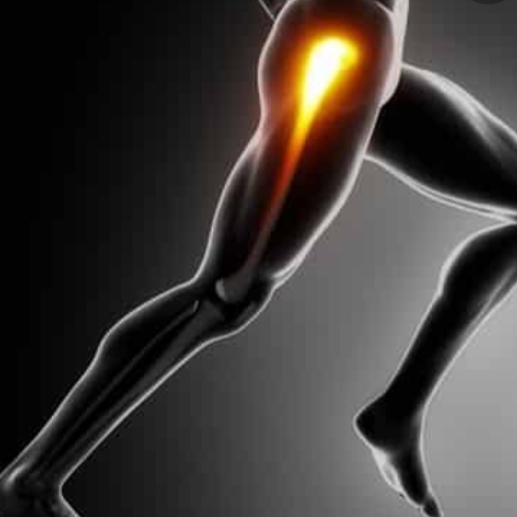
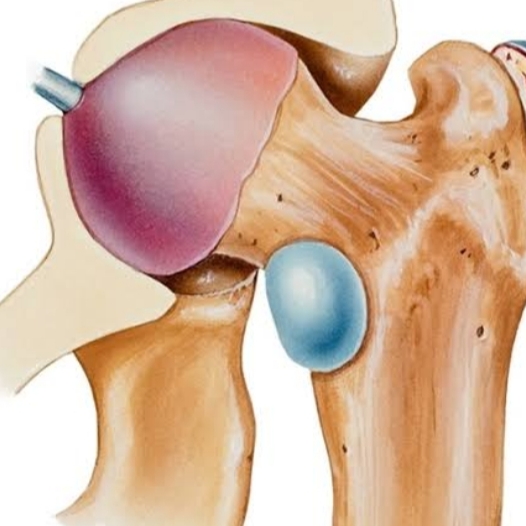
It is the inflammation (swelling) of the bursa (fluid-filled sac near a joint) at the outside (lateral) point of the hip known as the greater trochanter. ♦️ Causes
▪️Gender : #Women more commonly affected than men.
▪️Overweight / #obesity
▪️Trauma : e.g. #injury of the greater trochanter: this can deface the bursa.
▪️#Overuse of the muscles around the bursa or the joint underneath the bursa.
▪️Incorrect #position: this can cause an increase in pressure.
▪️Too much #pressure on the bursa (caused by friction of the Iliotibial band)
▪️#Dysfunction of the insertion of the muscle gluteus medius.
▪️Hip #osteoarthritis
▪️Lumbar #spondylosis
▪️Excessive or rapidly increased #mileage
▪️Repetitive #strain: e.g. frequent training with too much weight or training in a bad position
▪️Poorly cushioned #shoes: results in increased pressure on the muscles, joint and bursa
▪️Excessive pronation/ extreme #movement
Leg length differences
▪️#ITBS (Iliotibial Band Syndrome)
▪️Bacterial #infection
▪️Other inflammatory #diseases
▪️Hip #prosthesis ♦️ Symptoms
👉 Pain on the outside of the hip and thigh or in the buttock.
👉 A snap felt in the lateral aspect of the hip.
👉 Pain when lying on the affected side.
👉 Pain when you press in or on the outside of the hip.
👉 Pain that gets worse during activities such as getting up from a deep chair or getting out of a car.
👉 Pain while ascending up the stairs
👉 Development of pain-related sleep disturbance
👉 Lower back pain (Trochanteric Bursitis can present as lumbago)
♦️Prevention
✔️ It is important to avoid or modify the activities that cause the problem.
✔️ Underlying conditions such as leg length differences, improper posture, or poor technique in sports or work must be corrected.
✔️Apply these basic rules when performing activities:
▪️ Take it slow at first and
gradually build up your activity
level.
▪️ Use limited force and limited
repetitions.
▪️ Stop if unusual pain occurs.
✔️ Avoid repetitive activities that put stress on the hips.
✔️ Lose weight if you need to.
✔️ Get a properly fitting shoe insert for leg length differences.
✔️ Maintain strength and flexibility of the hip muscles.
✔️ Use a walking cane or crutches for a week or more when needed. ♦️ Treatment
1️⃣ The first phase is to manage the pain and the inflammation.
🔹 #Ice. (Apply ice packs to your hip every 4 hours for 20 to 30 minutes at a time.)
🔹#Rest. (If you can stay off your hip, you can give it time to heal. Using walkers, crutches, and other tools may help as well.)
🔹Non Steroidal Anti Inflammatory Drugs (#NSAIDs)
🔹#Electrotherapy (Low-energy Shockwave therapy. (Acoustic shock waves are passed through the skin with a targeted device. One analysis showed that more than two-thirds of patients given shock wave therapy were cured or greatly improved after 4 months.)
🔹Acupuncture
🔹 Taping techniques
🔹 Soft tissue mobilization
2️⃣ The second phase is to reinforce the patient’s strength and to restore the normal ROM
🔹 Active Range of motion exercises
🔹 Stretching Exercises
🔹 Isometric Exercises
🔹 Isotonic Exercises
🔹 Soft tissue mobilization
3️⃣ The third phase of rehabilitation is the restoration of all functions
🔹 Stretching Exercises
🔹 Strength Training
🔹 Proprioception Training
🔹 Balance Training
🔹 Coordination Exercises
🔹 Gait Training
4️⃣ The fourth phase is to prevent a relapse
🔹Training core muscles
🔹Fabricating foot orthotics to address any biomechanical faults in the lower limbs.
🔹Hip stability Exercises
🔹Balance Training ♦️Greater Trochanteric Rehabilitation Exercises
✔️ Gluteal stretch
✔️ Iliotibial band stretch
✔️ Quadriceps stretch
✔️ Straight leg raise
✔️ Hamstring wall stretch
✔️ Piriformis stretch
✔️ Prone hip extension
✔️ Side-lying leg lift
✔️ Wall squat with a ball
✔️ Quadruped hip extension
✔️ Clamshell
✔️ Double knee-to-chest
✔️ Bridging
✔️ Lying leg circles
✔️ Plank
✔️ Side planks

 Physiotherapist